

Your future follows your focus
In a world constantly competing for our attention, the ability to choose where we focus may be one of the most important skills we can develop.
At a Secondary School in Term 3, I illustrated this with a simple image. Sunlight falling on a piece of paper does very little. But place a magnifying glass between the sun and the paper, concentrating that same energy onto one point, and something remarkable happens: the paper begins to smoke and eventually catches fire. The amount of energy hasn’t changed. It has simply become focused.
This captures a timeless life principle: where attention goes, energy flows.
Our brains are constantly filtering an extraordinary amount of information, deciding what deserves our attention and what can remain in the background. Once something becomes important to us, we begin to notice things connected with it, ideas, possibilities and opportunities that may previously have escaped us.
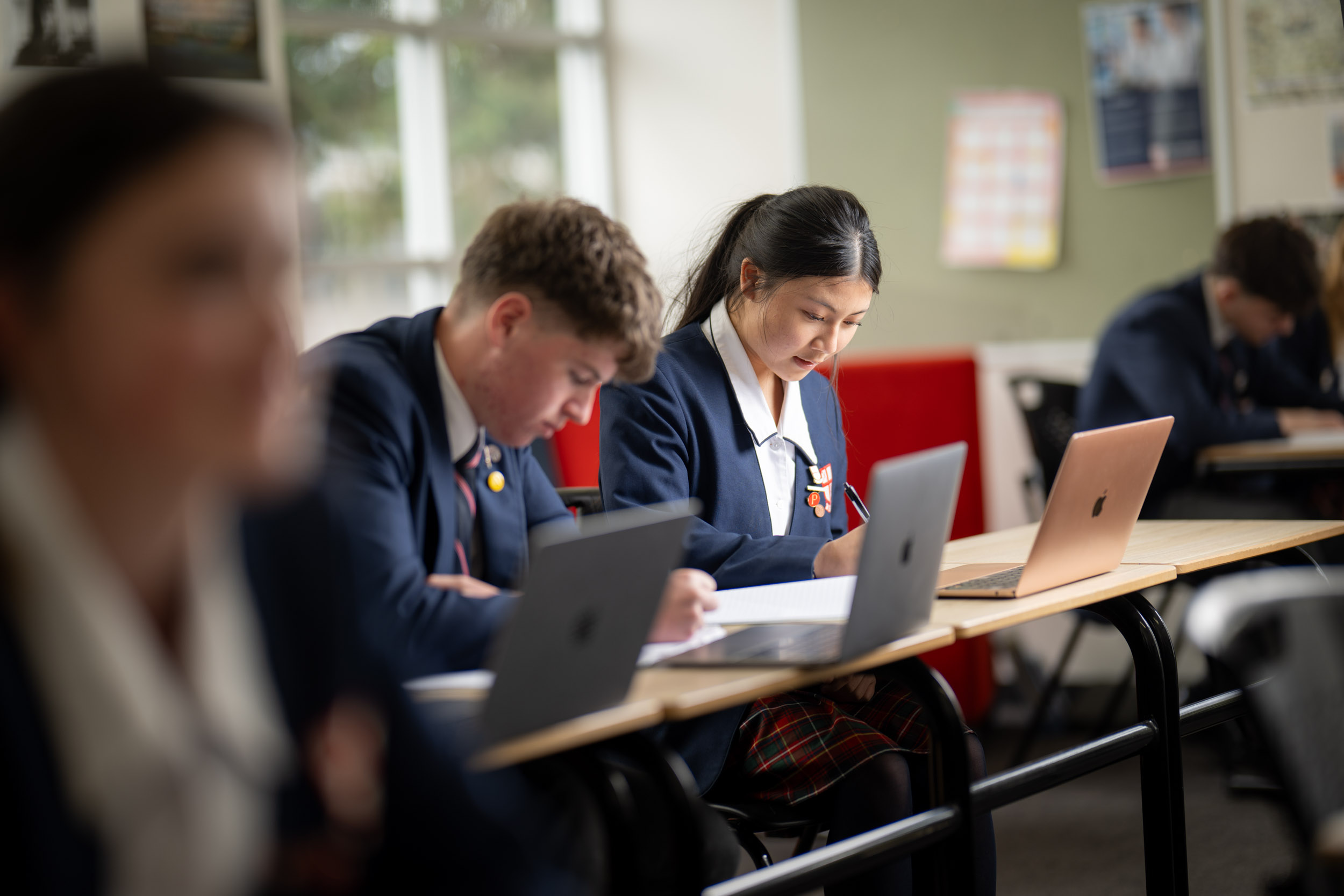
We see this principle clearly in learning. Two students can sit in the same classroom, hear the same explanation and encounter the same examples. One might simply hope to ‘get through’ the lesson; another might ask, “Can I master this?” Their experience can be remarkably different because attention shapes learning.
We see it elsewhere too. Great athletes focus not simply on avoiding mistakes, but on where they want the ball to go. Accomplished musicians isolate a difficult passage, slow it down and work deliberately until it improves. Focused attention creates the conditions for growth.
The reverse is also true. Distraction fragments our mental energy. Trying to complete homework while repeatedly checking messages requires our attention to switch continually between tasks. Rather than being fully present in either activity, our attention becomes scattered, and scattered attention tends to produce scattered results.
Parents can play an important role in helping our young people develop these habits at home. Whether completing homework, studying or engaging in home learning, young people benefit when families help create an environment in which concentration is easier. This might mean establishing a regular place for focused work, keeping phones and notifications out of reach for agreed periods, encouraging students to work on one task at a time, and building in genuine breaks. Parents can also help by asking a simple question before study begins: “What are you going to focus on achieving in the next 30 minutes?”
So, a worthwhile question for all of us, students, staff and parents is: What currently has my attention?
Imagine attention as water in a garden. Whatever we consistently water will grow. Our interests, habits, relationships, learning and character are shaped, little by little, by what receives our time and attention. This doesn’t mean being intensely productive every waking moment. Rest, play, conversation and simply noticing the world around us matter too. Rather, it means becoming more intentional about where we direct this precious and finite resource.
Perhaps the simplest way to remember it is this: Your future follows your focus. Over time, our lives reveal what repeatedly received our attention. What we consistently attend to has a powerful influence on what we learn, practise and ultimately become.
Amidst the noise and distraction of modern life, let’s help our young people learn to choose wisely what deserves their attention, and then give it their best.